September 8, 2026
High-quality images can make a major difference in e-commerce, photography, advertising, and digital marketing. Whether you sell products online, manage a photography business, or run a creative agency, professionally edited images can help your brand look more credible and attract more customers. But one common question remains: Should you edit your photos yourself or hire a professional photo editing service?
The answer depends on your workload, budget, editing requirements, turnaround time, and desired image quality.
In this guide, we compare DIY photo editing vs professional photo editing services to help e-commerce sellers, photographers, and agencies choose the right solution for their needs.
DIY, or “Do It Yourself,” photo editing means handling the entire editing process yourself instead of outsourcing it to a professional editor or photo editing company.
With software such as Adobe Photoshop, Lightroom, or other image editing applications, you can perform tasks such as:
DIY editing can be a practical option when you have only a few images to edit and already understand photo editing software.
For example, an online seller with five product photos may find it easier to make basic adjustments personally rather than outsource the project. However, the situation can become very different when hundreds or thousands of images need to be processed.
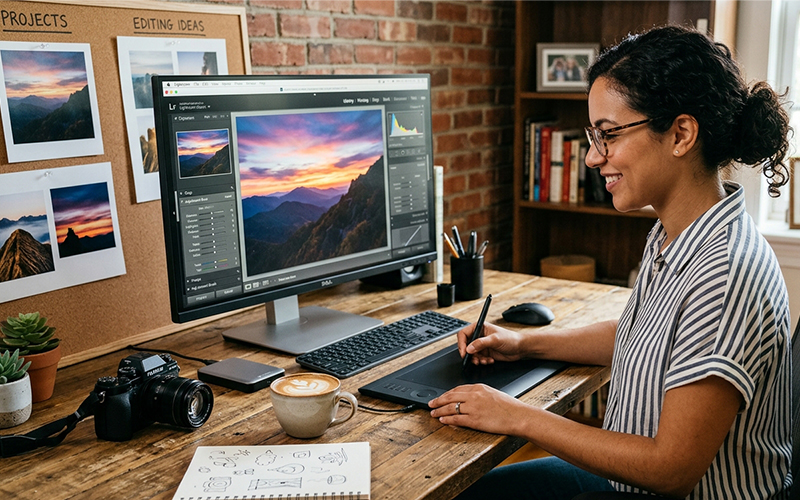
Professional photo editing involves outsourcing image editing work to experienced photo editors or a specialized photo editing company.
Instead of spending hours editing images yourself, you send your original photos to a professional team. The editors complete the required work according to your instructions and deliver the finished images.
Professional photo editing services can include:
For businesses that regularly process large numbers of images, professional photo editing can save significant time while maintaining consistent quality.
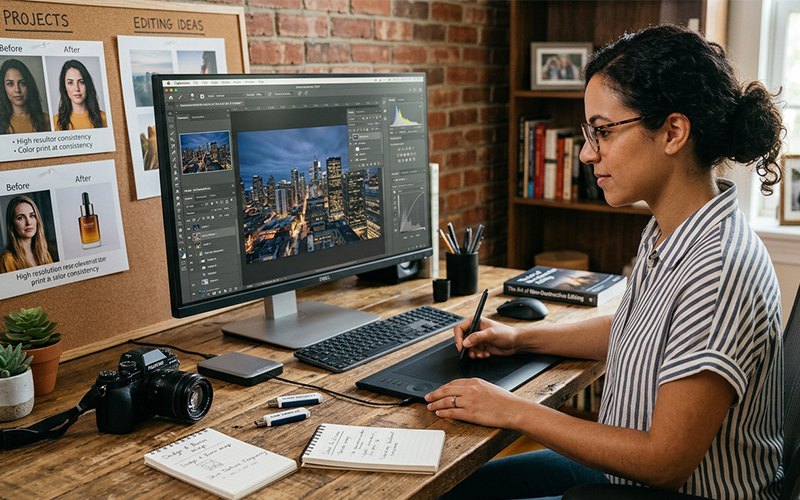
The biggest difference between DIY editing and professional photo editing is how your time, resources, and expertise are used.
At first glance, DIY photo editing may appear cheaper because you don’t have to pay an editor for every image.
However, DIY editing may require investment in:
Professional editing services have a direct per-image or project cost, but they can eliminate many of these overhead expenses.
For businesses with a high editing volume, outsourcing may actually be more cost-effective because employees can focus on sales, marketing, photography, customer service, or other important tasks.
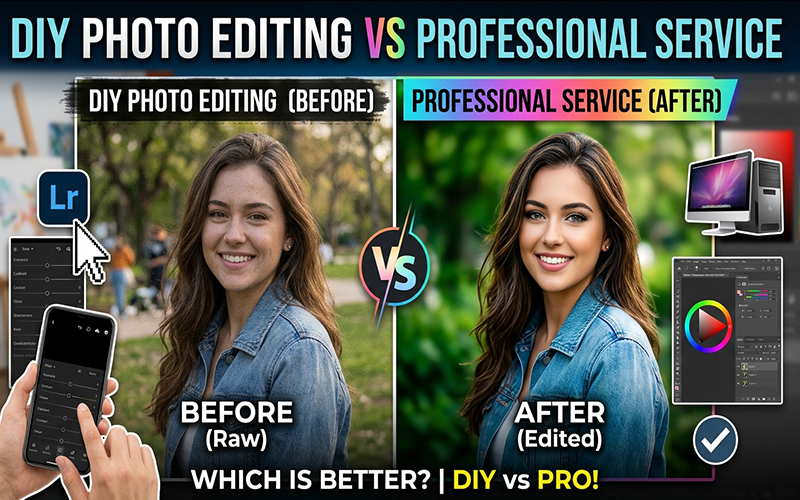
Time is one of the biggest factors when comparing DIY photo editing with professional services.
Editing a single simple product image might take only a few minutes. But detailed images involving hair, jewelry, transparent objects, complex backgrounds, or precise masking can take considerably longer.
If you have 500 product images and each image takes 10 minutes to edit, that’s more than 83 hours of editing work.
A professional photo editing service can distribute that workload among experienced editors and return the completed images much faster.
For e-commerce businesses working with frequent product launches, seasonal campaigns, or large catalogs, outsourcing can be particularly valuable.
Professional editors typically have extensive experience working with different types of images and editing requirements.
A beginner may produce acceptable results for basic edits but struggle with complex areas such as:
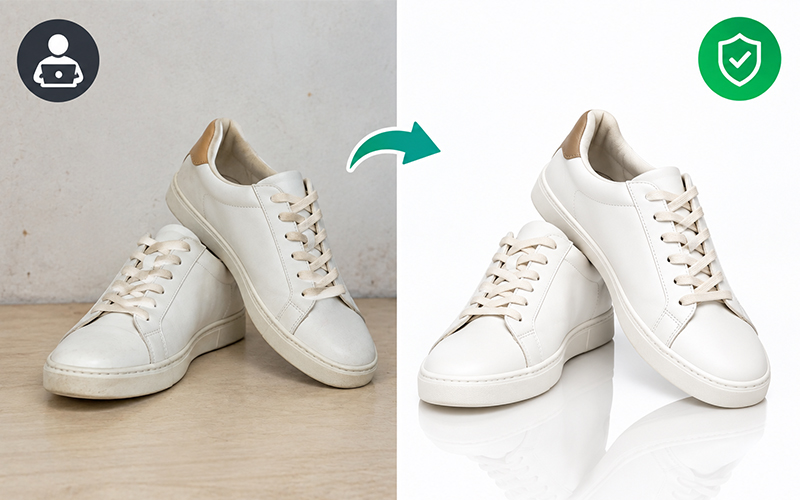
Professional editors understand how to maintain realistic edges, preserve product details, and create images that look natural rather than overly processed.
This is particularly important for e-commerce because poor image quality can make products look less trustworthy.
Consistency is essential when managing an online product catalog.
Suppose an e-commerce store has 1,000 product images. If each image has a different background color, crop, shadow, brightness, or product position, the website can look unprofessional.
Professional photo editing teams can follow standardized instructions across an entire project.
For example, you can specify:
This helps create a unified visual identity across your product catalog.
DIY editing can work well for small e-commerce businesses with limited image requirements.
If you sell only a few products and need occasional basic edits, learning Photoshop or another editing application can give you greater control.
DIY editing may be suitable when:
However, as your business grows, the number of product images can increase quickly. That’s when outsourcing may become a more practical solution.
Professional product photo editing can help online sellers process large catalogs while allowing them to focus on inventory, marketing, customer service, and sales.
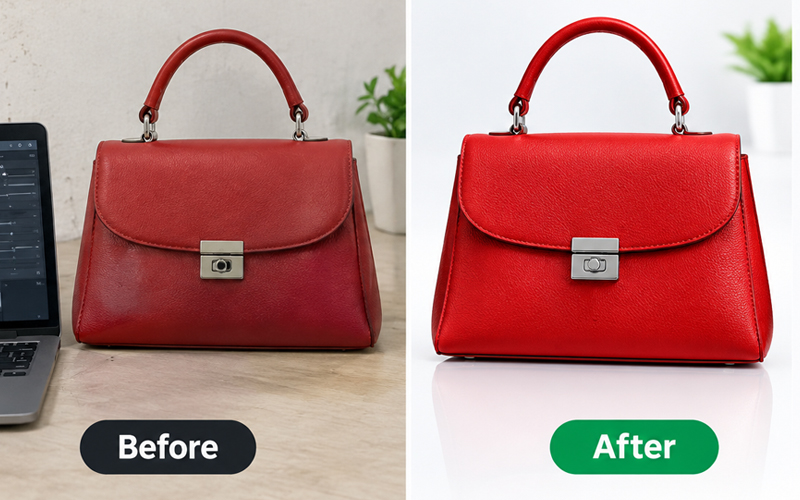
Photographers often have a different challenge. After a photoshoot, they may have hundreds or thousands of RAW images waiting to be processed.
A photographer may need to perform:
While photographers should maintain creative control over their work, outsourcing repetitive editing tasks can give them more time for photography, client communication, marketing, and business development.
For wedding, fashion, portrait, product, and event photographers, outsourcing can be particularly useful during busy seasons.
Agencies often manage multiple clients simultaneously. This means they may have to deal with large quantities of visual content and tight deadlines.
A creative agency might receive hundreds of product images for an e-commerce campaign or dozens of photos for a marketing project.
Handling everything internally can create bottlenecks.
Outsourcing professional photo editing can provide agencies with additional production capacity without requiring them to hire and train a large in-house editing team.
This allows agencies to scale their workload based on project demand.
DIY editing makes sense when the project is small and the editing requirements are straightforward.
Consider DIY editing if:
For personal projects, social media content, or occasional product photos, DIY editing can be perfectly reasonable.
Professional photo editing becomes more attractive when image volume, complexity, or deadlines increase.
You should consider outsourcing if:
The goal isn’t simply to reduce editing work. It’s to use your time and resources more efficiently.
For many businesses, the real question isn’t simply “How much does photo editing cost?”
Instead, ask: How much is my time worth?
If you spend 40 hours every month editing product images, that is 40 hours that could potentially be spent on business development, marketing, photography, customer service, or sales.
Professional photo editing services can turn that editing workload into an outsourced production process.
The value becomes even greater when consistent image quality and fast turnaround are important to your business.
| Factor | DIY Photo Editing | Professional Service |
| Initial Cost | Usually lower | Service cost required |
| Time Required | High for large projects | Much lower for the client |
| Skill Required | Moderate to advanced | Minimal client-side expertise |
| Quality | Depends on your skills | Professional and consistent |
| Large Image Volumes | Difficult to manage | Easier to scale |
| Consistency | Can vary | Usually standardized |
| Turnaround | Depends on your schedule | Based on agreed deadline |
| Creative Control | Very high | High with clear instructions |
| Best For | Small/simple projects | Large/complex projects |
Before deciding between DIY editing and professional photo editing, consider five important factors.
If you only have a handful of images, DIY editing may be practical. For hundreds or thousands of images, outsourcing can save substantial time.
Simple cropping and brightness adjustments are easier to handle yourself. Complex clipping paths, masking, retouching, and image manipulation are often better handled by experienced editors.
If images need to be ready quickly for a product launch or advertising campaign, professional editing can help you meet deadlines.
Consider the total cost of DIY editing, including software, equipment, training, and your time—not just the software subscription.
If your images represent your brand, product, or professional photography portfolio, quality should be a major consideration.
For businesses that need reliable image editing at scale, Clipping Images provides professional photo editing solutions designed for e-commerce sellers, photographers, retailers, and agencies.
Instead of spending hours manually editing every image, you can outsource repetitive and time-consuming tasks to experienced photo editors.
Professional editing can help you maintain:
Whether you need product background removal, clipping paths, photo retouching, or other image editing services, outsourcing can help streamline your workflow.
There is no universal winner in the DIY photo editing vs professional service debate. The right choice depends on your business size, image volume, editing complexity, budget, and deadlines.
DIY photo editing is ideal for individuals and small businesses that have limited images and enough time to handle the work themselves.
Professional photo editing is generally a better choice when you need high-quality results, consistent editing, fast turnaround, and large-scale image processing.
For e-commerce sellers, photographers, and agencies, outsourcing repetitive editing tasks can free up valuable time while keeping visual content professional and consistent.
If editing hundreds of images is slowing down your business, it may be time to stop doing everything yourself and let a professional photo editing team handle the workload. With the right partner, you can focus less on pixels and more on growing your business.