June 7, 2026
Artificial Intelligence (AI) is no longer limited to large technology companies and research institutions. Thanks to cloud computing, AI tools and services are now accessible to individuals, startups, small businesses, and enterprises of all sizes. Cloud AI combines the power of artificial intelligence with the flexibility and scalability of cloud computing, making advanced technologies available through the internet without requiring expensive hardware or specialized infrastructure.
Whether you’re a student, entrepreneur, developer, marketer, or business leader, Cloud AI can help automate tasks, improve decision-making, increase productivity, and create innovative solutions. This comprehensive guide explains what Cloud AI is, how it works, and how beginners and professionals can use it effectively.
Cloud AI refers to artificial intelligence services, tools, and applications that are hosted on cloud platforms. Instead of installing and running AI software on local computers, users access AI capabilities through online platforms and APIs.
Cloud AI providers offer services such as:
These services are delivered over the internet, allowing users to leverage powerful AI models without investing in costly hardware.
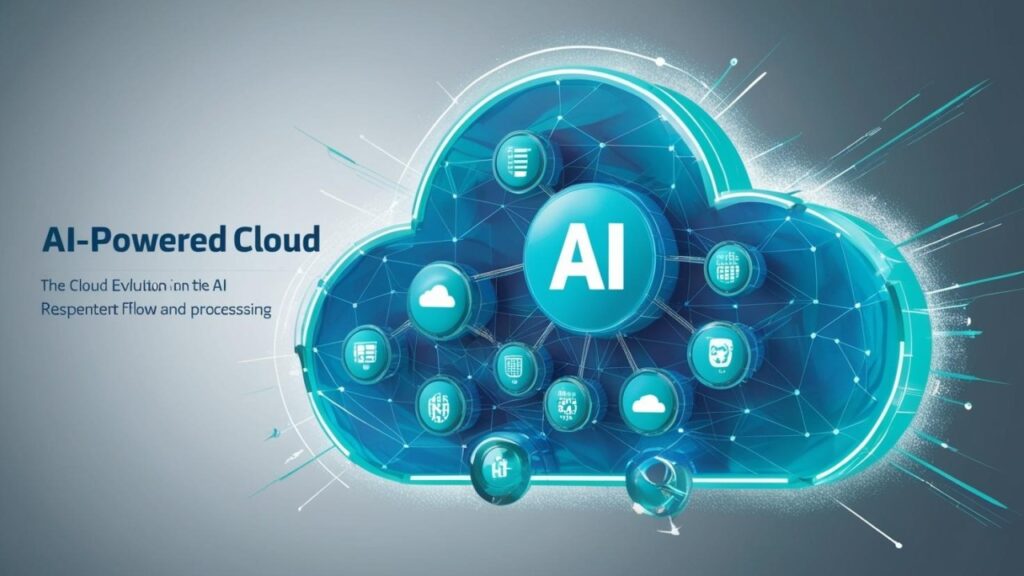
Cloud AI has gained widespread adoption because it removes many barriers associated with traditional AI development.
Users can access advanced AI tools from anywhere with an internet connection.
Organizations avoid purchasing expensive servers and computing equipment.
Cloud platforms allow businesses to increase or decrease computing resources based on demand.
Pre-built AI models reduce the time needed to develop intelligent applications.
Cloud providers regularly update their AI services with new features and improved models.
Cloud AI operates through remote servers maintained by cloud providers. When users submit data or requests, the information is processed by AI systems hosted in the cloud.
A typical workflow includes:
For example, when using an AI writing assistant, your prompt is processed on cloud servers, and the generated response is returned within seconds.
Several major companies offer powerful Cloud AI services.
Google provides advanced machine learning tools, language models, computer vision services, and data analytics solutions.
Azure offers AI services including speech recognition, language processing, computer vision, and machine learning tools.
AWS provides numerous AI and machine learning services for businesses and developers.
IBM Watson focuses on enterprise AI applications, analytics, and natural language understanding.
OpenAI provides powerful generative AI capabilities for text generation, coding assistance, image creation, and more.
You don’t need programming skills to benefit from Cloud AI. Many tools are designed for non-technical users.
Cloud AI can help create:
AI writing tools save time while improving productivity.
Modern AI systems can create unique images from simple text descriptions.
Uses include:
Cloud AI can instantly translate content into multiple languages, helping businesses reach global audiences.
Students can use AI for:
AI-powered tools can assist with:
Businesses across industries are adopting Cloud AI to improve efficiency and competitiveness.
AI chatbots can:
Cloud AI helps marketers:
AI systems can identify sales opportunities and recommend actions based on customer data.
Businesses generate enormous amounts of data daily. Cloud AI helps transform this data into actionable insights.
Applications include:
Financial institutions use AI to detect suspicious transactions and prevent fraud.
Developers can integrate AI capabilities directly into applications.
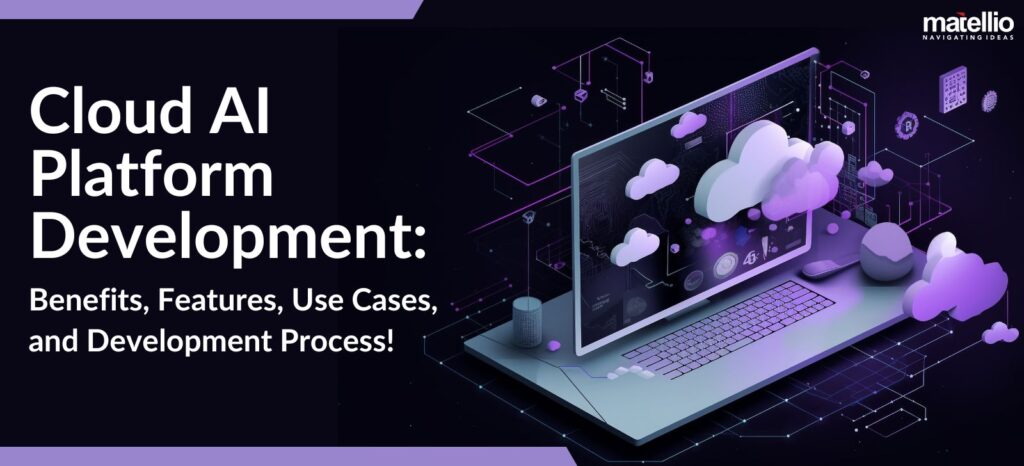
Most cloud providers offer APIs that allow applications to access AI services.
Developers can add:
Developers can train and deploy custom machine learning models using cloud infrastructure.
AI can improve software through:
Online retailers benefit significantly from AI-powered solutions.

AI analyzes customer behavior and suggests products users are likely to purchase.
Cloud AI predicts demand and helps optimize stock levels.
Retailers can adjust prices based on market conditions and customer behavior.
AI can improve product photos, remove backgrounds, and generate visual variations.
Chatbots answer questions and guide customers through the buying process.
Healthcare organizations increasingly rely on AI-powered solutions.

AI assists doctors in analyzing X-rays, MRIs, and CT scans.
Machine learning models identify potential health risks based on patient data.
AI reduces paperwork and streamlines healthcare operations.
Researchers use AI to accelerate drug discovery and development.
Educational institutions use AI to improve learning outcomes.
AI adapts educational content to individual student needs.
Teachers can automate grading and feedback processes.
AI-powered tutors provide personalized learning support.
Students benefit from speech recognition and translation technologies.
Designers, photographers, writers, and content creators use AI daily.

AI assists with:
Cloud AI can:
AI tools simplify:
Writers use AI for brainstorming, editing, and content generation.
Organizations avoid expensive infrastructure investments.
AI automates repetitive tasks and improves productivity.
Advanced analytics provide valuable business insights.
Personalized interactions enhance customer satisfaction.
Businesses can quickly experiment with new ideas and technologies.
Despite its advantages, Cloud AI also presents challenges.
Organizations must protect sensitive information when using cloud services.
Strong cybersecurity measures are essential.
Cloud AI requires reliable internet access.
Poor resource management can increase operational expenses.
Organizations must ensure responsible AI usage and avoid biased outcomes.
To maximize success, follow these best practices:
Begin with simple projects before implementing large-scale AI initiatives.
Understand what problems you want AI to solve.
High-quality data produces better AI results.
Regularly evaluate AI outputs and system performance.
Ensure teams understand how to use AI tools effectively.
Implement proper security and privacy measures.
Cloud AI continues to evolve rapidly. Future developments may include:
AI systems will generate increasingly sophisticated content.
Businesses will automate more processes using AI.
Customer experiences will become even more customized.
AI will act as a collaborative partner rather than simply a tool.
Cloud providers will develop specialized AI services for healthcare, finance, education, manufacturing, and other sectors.
If you’re interested in using Cloud AI, start by identifying a task that could benefit from automation or intelligent analysis. Explore free trials offered by major cloud providers and experiment with beginner-friendly tools.
You don’t need to be a programmer or data scientist to benefit from AI. Modern Cloud AI platforms provide intuitive interfaces, pre-trained models, and easy-to-use applications that make artificial intelligence accessible to everyone.
Cloud AI has revolutionized access to artificial intelligence by making powerful tools available through the internet. From content creation and customer service to data analytics and software development, Cloud AI offers opportunities for individuals and organizations across virtually every industry.
Beginners can use ready-made AI applications to improve productivity, while professionals and developers can build sophisticated AI-powered solutions. As technology continues to advance, Cloud AI will play an increasingly important role in shaping the future of work, business, education, healthcare, and everyday life.
By understanding its capabilities and applying best practices, anyone can harness the power of Cloud AI to innovate, solve problems, and achieve their goals more effectively.