September 13, 2026
When customers shop online, they cannot physically touch, hold, or inspect a product before making a purchase. They depend on photographs to understand what a product looks like, evaluate its quality, and decide whether it is worth their money. This is why professional product photos are more than attractive visuals—they are an important sales tool for modern e-commerce businesses.
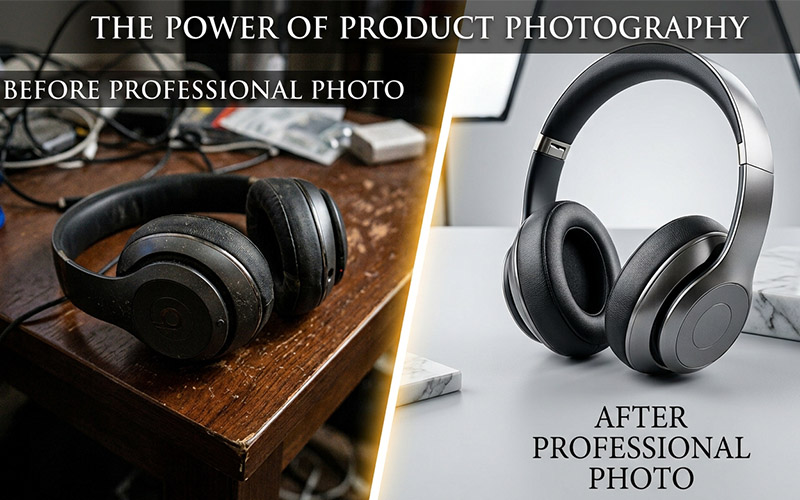
A product can have excellent quality, competitive pricing, and great features, but poor photography can make it difficult to communicate that value. Blurry images, inconsistent lighting, distracting backgrounds, incorrect colors, or amateur compositions can quickly reduce customer confidence.
On the other hand, professional product photography creates a strong first impression, communicates important details, builds trust, and helps shoppers feel more confident about buying.
For e-commerce sellers, photographers, and creative agencies, understanding why professional product photos sell more can help improve product presentation and create a better online shopping experience.

A professional product photo is not simply an image captured with an expensive camera. It combines photography, lighting, composition, styling, editing, and presentation to show the product clearly and accurately.
Professional product images typically have:

The purpose is not to make a product look unrealistically perfect. The goal is to present it in the clearest, most appealing, and most trustworthy way possible.
First impressions matter in e-commerce.
When shoppers land on a product page, they usually notice the visual presentation before reading every feature or specification. A professional image immediately communicates that the business takes its products seriously.
Imagine two online stores selling similar watches. One uses sharp, professionally lit images with clean backgrounds and detailed close-ups. The other uses dark, blurry photographs taken from inconsistent angles.
Even before comparing prices, customers may perceive the first store as more trustworthy.
This is one reason professional product photography can influence purchasing decisions. The image becomes part of the customer’s first impression of both the product and the brand.
Trust is essential for online sales.
Customers cannot physically examine a product through their computer or smartphone. They need visual evidence that the product they are considering is genuine, well-made, and accurately represented.
Professional images can help establish that confidence.
Clear photographs allow customers to inspect:
When customers can see what they are buying, uncertainty decreases.
This is particularly important for new brands that do not yet have thousands of reviews or a long history of customer recognition.4
Photography can influence how customers perceive product quality.
A luxury handbag photographed with poor lighting and a cluttered background may look ordinary. The same handbag photographed with controlled lighting, careful composition, and professional retouching can communicate its premium characteristics much more effectively.
Professional photography helps highlight details that make a product valuable.
For example:
The product itself does not change. What changes is how effectively its value is communicated.

Perceived value plays an important role in purchasing decisions.
Customers often use visual presentation as one of the signals they rely on when judging whether a product deserves its price.
A carefully produced product image can make the entire shopping experience feel more premium.
This does not mean businesses should manipulate photographs to misrepresent their products. Instead, professional photography should accurately show the product while presenting it at its best.
A polished image can help customers understand why a product may cost more than a cheaper alternative.
One of the most common problems with amateur product photography is a distracting background.
Objects in the background, messy environments, uneven surfaces, and unnecessary colors can compete with the product for attention.
For many e-commerce marketplaces, a clean white or neutral background is particularly effective.
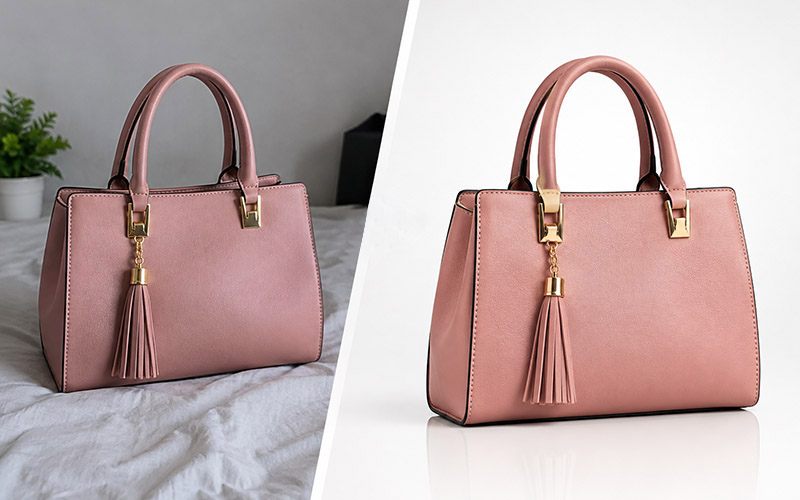
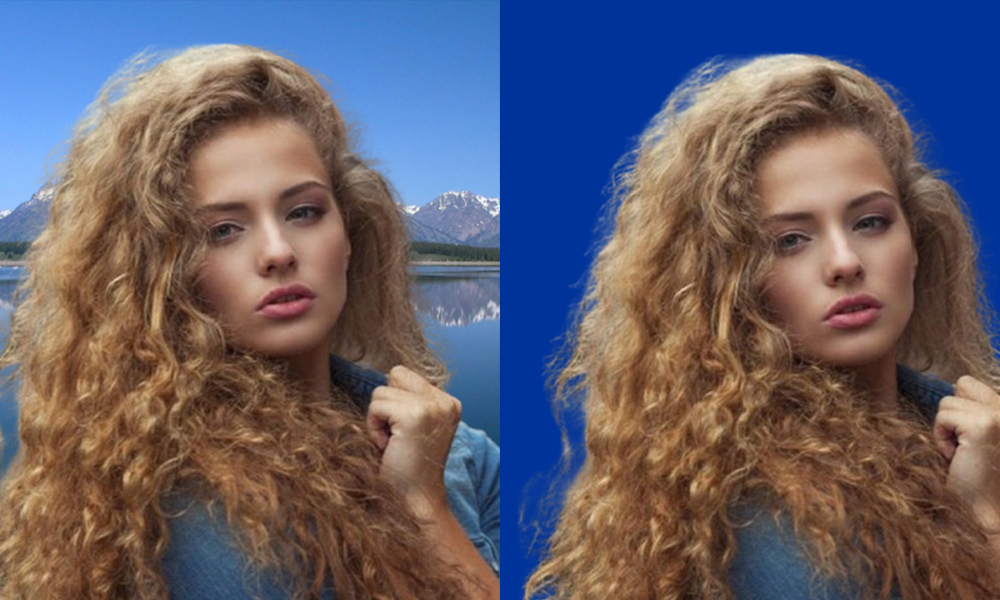
Professional background removal can isolate a product from its original environment and create a clean, consistent presentation.
This is especially useful for large product catalogs where every image needs to follow the same visual style.
Services such as clipping path, background removal, image masking, and product photo retouching can help businesses achieve this consistency.
A single photograph rarely tells customers everything they need to know.
Professional e-commerce photography should often include multiple views of the same product.
Depending on the product, useful images may include:
For example, someone purchasing a backpack may want to see the front design, side profile, straps, compartments, zipper quality, and interior space.
More useful images give shoppers more information and can reduce hesitation.
Studio product photos are excellent for showing product details, but lifestyle photography can create an emotional connection.
Lifestyle images place the product in a realistic environment.
A furniture company might show a sofa in a modern living room. A fashion brand might show clothing worn by a model. A kitchenware company might photograph its products being used while preparing a meal.
These images help answer an important question:
“How will this product fit into my life?”
When customers can visualize themselves using a product, it becomes easier to imagine ownership.
For this reason, combining standard product images with lifestyle photography can be an effective e-commerce strategy.
Online shoppers naturally have questions before purchasing.
They may wonder:
Professional product photos can answer many of these questions visually.
Showing accurate colors, multiple angles, close-up details, and useful scale references can reduce uncertainty.
Less uncertainty can make the purchasing decision easier.
Increasing sales is important, but reducing unnecessary returns is also valuable.
A customer may return a product because it looked different from what they expected.
This can happen when product images:
Professional photography should therefore focus on both attractiveness and accuracy.
Showing the real product clearly helps customers form realistic expectations before placing an order.
Branding is not limited to logos and color schemes.
The visual style of product photography can become part of a brand’s identity.
For example, an e-commerce brand might consistently use:
When shoppers browse several products, this consistency creates a more organized and professional experience.
It can also make the brand easier to recognize across marketplaces, social media, websites, and advertising campaigns.
Product photography is not limited to product pages.
The same high-quality images can often be used across multiple marketing channels.
Professional product photos can support:
A strong product image can therefore become a reusable marketing asset.
For agencies managing e-commerce clients, professionally prepared product photography can provide the visual foundation for campaigns across multiple platforms.
Visual content can also contribute to an e-commerce site’s search visibility when properly optimized.
Businesses should consider:
For example, a descriptive filename such as black-leather-handbag.jpg provides more useful context than a generic filename such as IMG_2847.jpg.
Image SEO should be part of a broader product-page optimization strategy that includes useful descriptions, structured information, internal links, and strong user experience.
Many e-commerce businesses receive product photographs from different photographers, suppliers, manufacturers, or locations.
As a result, images may have different backgrounds, lighting conditions, dimensions, and color tones.
Professional product photo editing services can standardize these images.
Common editing tasks include:
Removing unwanted backgrounds and placing products on clean, consistent backgrounds.
Creating precise outlines around products, particularly useful for objects with clear edges.
Separating products with complex edges, such as hair, fur, transparent materials, or intricate objects.
Adjusting colors so products appear more accurate and consistent.
Removing dust, minor imperfections, unwanted reflections, or distracting elements.
Adding realistic shadows to create depth and prevent products from appearing unnaturally flat.
These services can be especially useful when businesses need hundreds or thousands of images prepared for online stores.

E-commerce success is not only about convincing customers to purchase.
It is also about making shopping easy.
A well-designed product page with clear, professional images helps customers understand products without unnecessary effort.
Good images work together with:
When all these elements work together, customers can make more informed decisions.
There is no universal rule that says professional photography will increase every store’s conversion rate by a specific percentage. Conversion performance depends on many factors, including pricing, product quality, traffic source, website design, reviews, brand reputation, and checkout experience.
However, strong product images remove a major barrier in online shopping: the inability to physically inspect the product.
That makes professional product photography an important part of a broader conversion optimization strategy.
Businesses can also use A/B testing to compare different image styles and determine which visual presentation produces better results.
Possible tests include:
Tracking metrics such as add-to-cart rate, conversion rate, engagement, and revenue per visitor can help identify what works best.
Even businesses investing in photography can make mistakes.
Avoid:
The best product photography is attractive without being misleading.
For e-commerce sellers, product images are not simply an expense. They are an investment in how customers perceive and understand the products being sold.
A professional image can be used repeatedly across product pages, advertisements, social media, marketplaces, catalogs, and marketing campaigns.
For photographers, delivering professionally edited images can improve client satisfaction and strengthen their portfolio.
For agencies, outsourcing repetitive photo editing can save production time and help maintain consistent quality across large client projects.
The investment becomes even more valuable when a business has a large product catalog that needs standardized visual content.
Professional product photos sell more because they help customers see, understand, trust, and value a product before purchasing it.
In an online store, photography often performs the job that physical product inspection would normally perform in a traditional shop.
Sharp images show details. Clean backgrounds remove distractions. Multiple angles answer questions. Lifestyle photos create emotional context. Professional editing improves consistency. Accurate colors and realistic retouching build trust.
For e-commerce sellers, photographers, and agencies, the lesson is simple: better product presentation can create a better buying experience.
If your products deserve to look professional, your images should reflect that quality. From clipping paths and background removal to retouching, color correction, masking, and shadow creation, professional image editing can turn ordinary product photographs into polished visual assets ready for e-commerce and marketing.
At ClippingImages.com, professional photo editing helps businesses and creative professionals prepare product images that are clean, consistent, accurate, and ready to make a stronger impression online.