September 27, 2026
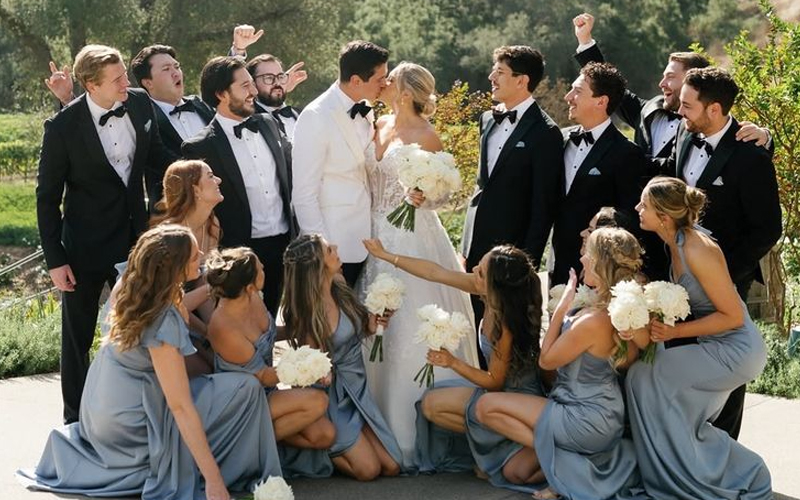
Wedding photography is one of the most important forms of photography because every image captures a once-in-a-lifetime moment. From the emotional exchange of vows to joyful family portraits and romantic couple shots, wedding photographs preserve memories that couples can treasure for generations. However, capturing a beautiful photograph is only the first step. Professional wedding photo editing is essential for transforming raw images into polished, consistent, and emotionally powerful photographs.
Modern wedding photographers often capture hundreds or even thousands of images during a single event. Editing every photograph manually can require significant time and technical expertise. Professional photo editing services can help photographers improve image quality, maintain consistency, and deliver final galleries more efficiently.
In this comprehensive guide, we will explore what wedding photo editing is, why it matters, the most popular editing techniques, and how professional editing can help wedding photographers create stunning final images.
What Is Wedding Photo Editing?
Wedding photo editing is the process of enhancing and correcting photographs captured during weddings. It can include basic adjustments such as exposure, brightness, contrast, color correction, and white balance, as well as advanced techniques such as skin retouching, background enhancement, object removal, and creative color grading.
Professional wedding photo editing aims to preserve the natural appearance of the people and environment while improving the overall visual quality of the photograph.
A typical wedding editing workflow may include:
The exact editing process depends on the photographer’s style, the lighting conditions, and the requirements of the client.
Why Is Wedding Photo Editing Important?
Wedding photography involves challenging lighting conditions, crowded environments, different skin tones, and rapidly changing scenes. Even professional photographers may capture images that require post-production adjustments.
Editing helps photographers solve many of these problems while creating a consistent visual style across the entire wedding gallery.
1. Improves Image Quality
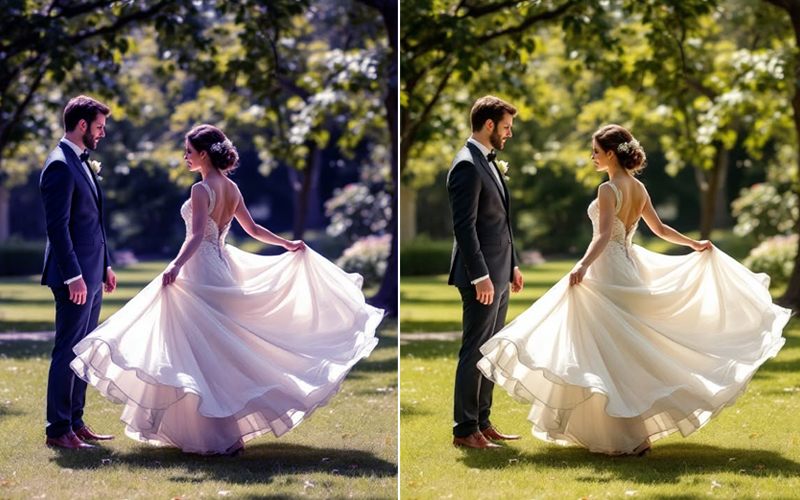
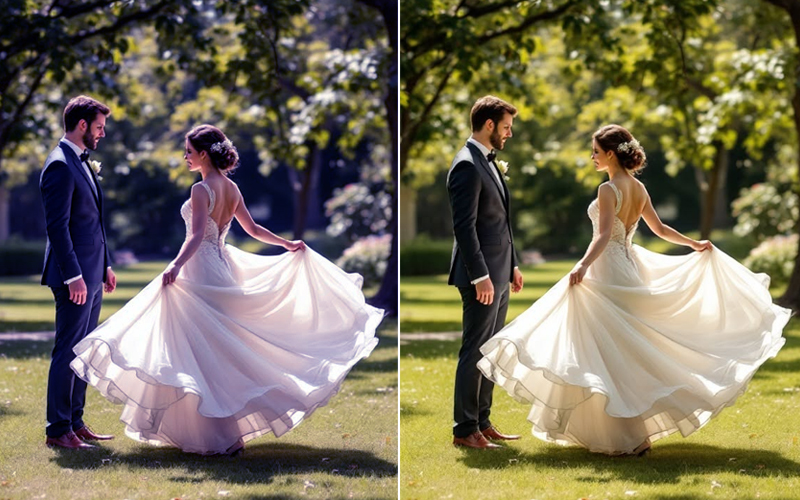
RAW photographs often look flat and less vibrant before editing. Professional editing can improve exposure, contrast, colors, sharpness, and overall image quality.
For example, an outdoor wedding photograph may have harsh sunlight and strong shadows. Editing can balance those areas and create a more natural-looking image.
2. Creates Consistency
A wedding gallery may contain photographs captured at different times and under different lighting conditions. Without editing, each photograph may have a different color temperature or exposure.
Professional wedding photo editing services can create consistency throughout the entire collection.
This is especially important when couples view their photographs as a complete wedding album rather than individual images.
3. Enhances Skin Tones
Skin tone is one of the most important elements in wedding photography. Incorrect white balance, mixed lighting, or strong color casts can make skin appear unnatural.
Professional editing can correct these problems while maintaining realistic skin texture and detail.
4. Removes Unwanted Distractions
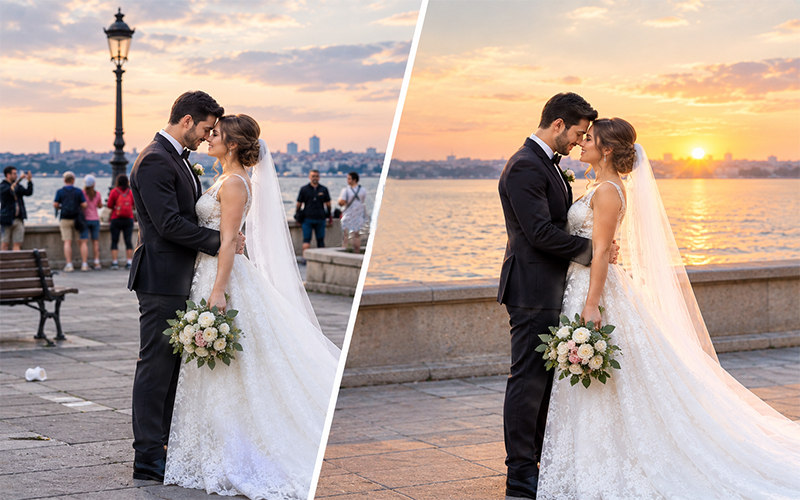
Wedding venues can contain distracting objects such as cables, signs, bags, people in the background, or unwanted decorations.
Object removal and background cleanup can help direct attention toward the bride, groom, and important moments.
5. Creates a Professional Style
Editing allows photographers to develop a recognizable visual identity. Some photographers prefer bright and airy photographs, while others prefer warm, cinematic, dark, or classic styles.
Consistent editing can become an important part of a photographer’s brand.
10 Important Keywords for Wedding Photo Editing
For SEO purposes, the following keywords can be naturally incorporated into an article, service page, or photography business website:
These keywords should be used naturally. Avoid excessive repetition because keyword stuffing can make an article difficult to read and may negatively affect the user experience.
Common Wedding Photo Editing Techniques
Professional wedding photographers use a variety of editing techniques to create polished images.
1. RAW Photo Editing
RAW files contain significantly more image information than standard JPEG files. This gives editors greater flexibility when adjusting exposure, shadows, highlights, colors, and white balance.
RAW editing is particularly useful for wedding photography because lighting conditions can change quickly during an event.
For example, a photographer may move from an outdoor ceremony into a dark reception hall. RAW processing can help recover detail and balance exposure across these different environments.
2. Exposure Correction
Exposure problems are common in wedding photography.
A bright white wedding dress can sometimes cause photographers to underexpose the rest of the scene, while dark suits may cause cameras to expose the image differently.
Professional editing can adjust highlights, shadows, whites, and blacks to create a balanced photograph.
3. White Balance Correction
Different lighting sources produce different colors. Natural sunlight, fluorescent lights, LED lighting, candles, and indoor bulbs can all affect the color temperature of an image.
Wedding photo color correction helps produce accurate and consistent colors.
Proper white balance is especially important for wedding dresses and skin tones because unwanted color casts can become very noticeable.
4. Skin Retouching
Wedding portraits often require subtle skin retouching.
Professional wedding photo retouching may include:
The goal should not be to make people look artificial. High-quality retouching should preserve the natural character of the subject.
5. Background Cleanup
A beautiful wedding portrait can be weakened by a distracting background.
Editors can remove unwanted objects such as:
Background cleanup creates a cleaner composition and helps the main subjects stand out.
6. Object Removal
Object removal is one of the most useful advanced editing techniques.
Imagine a couple taking a romantic photograph at a beautiful wedding venue. A random person walking behind them could distract from the image.
Professional editors can remove that person while carefully reconstructing the background.
This process requires precision, especially when the background contains detailed architecture, plants, textures, or patterns.
7. Color Grading
Color grading gives wedding photographs a particular mood or style.
Popular wedding photography styles include:
Color grading should complement the wedding atmosphere rather than overpower it.
8. Black-and-White Editing
Black-and-white photography remains popular for emotional wedding moments.
Removing color can emphasize:
Black-and-white editing is particularly effective for intimate portraits, emotional ceremonies, and candid moments.
Wedding Photo Editing for Different Types of Images
Not every wedding photograph should receive exactly the same editing treatment.
Bride Portraits
Bride portraits often require detailed skin retouching, dress enhancement, exposure correction, and subtle color grading.
The wedding dress should remain white or appropriately colored without losing important fabric details.
Groom Portraits
Groom portraits may require attention to skin tone, suit details, hair, facial features, and background distractions.
Editors should avoid excessive retouching because natural facial characteristics are an important part of the photograph.
Couple Portraits
Couple portraits usually benefit from consistent skin tones, balanced exposure, background cleanup, and creative color grading.
The objective is to emphasize the relationship and emotion between the couple.
Family Photos
Family photographs require careful consistency because several people may appear in the same image.
Editors may need to correct different skin tones, remove distractions, and ensure that everyone is properly exposed.
Candid Wedding Photos
Candid images capture spontaneous moments and emotions.
Editing should generally remain natural. Excessive retouching can remove the authenticity that makes candid wedding photography special.
Wedding Ceremony Photos
Ceremony photographs can present difficult lighting conditions. Churches, halls, outdoor locations, and decorated venues may have mixed lighting.
Exposure, white balance, noise reduction, and shadow recovery can be especially important.
Professional Wedding Photo Editing Workflow
A structured workflow can help photographers manage large wedding galleries efficiently.
Step 1: Organize the Images
The first step is to organize photographs by event, location, or sequence.
Photographers may create folders for:
Good organization makes the editing process more efficient.
Step 2: Select the Best Photographs
Photographers may capture hundreds or thousands of images, but not every photograph needs to be delivered.
A selection process can remove:
Step 3: Apply Basic Corrections
Basic corrections usually include exposure, contrast, highlights, shadows, white balance, and saturation.
These adjustments create a strong foundation for further editing.
Step 4: Apply Consistent Color Adjustments
Editors should maintain a consistent visual appearance across the gallery.
A photograph from the ceremony should not look dramatically different from a photograph taken during the reception unless a deliberate creative style is being used.
Step 5: Retouch Important Portraits
Not every photograph requires intensive retouching.
Detailed retouching is generally most valuable for:
Step 6: Perform Detailed Cleanup
Unwanted objects, distractions, and background issues can be removed during this stage.
Step 7: Final Quality Check
Before delivery, photographs should be reviewed for:
Step 8: Export and Deliver
Final images can be exported according to the requirements of the photographer or client.
High-resolution files may be prepared for albums and printing, while optimized versions can be created for websites and social media.
Wedding Photo Editing Services for Professional Photographers
Many wedding photographers outsource their post-production work because editing a large wedding gallery can take many hours.
A professional wedding photo editing company can provide specialized post-production support while allowing photographers to focus on shooting, marketing, client communication, and business development.
Common outsourced services include:
Outsourcing can be particularly useful during busy wedding seasons when photographers have multiple galleries waiting to be processed.
Benefits of Outsourcing Wedding Photo Editing
Saves Time
Editing thousands of wedding images can take days or even weeks.
Outsourcing allows photographers to spend more time on photography and client relationships.
Maintains Consistency
Professional editors can follow predefined editing instructions, Lightroom presets, reference images, or style guidelines.
This helps maintain a consistent appearance across different wedding galleries.
Handles Large Volumes
During peak wedding seasons, photographers may have several projects simultaneously.
A professional editing team can help manage large volumes of photographs.
Supports Faster Delivery
Clients generally appreciate receiving their wedding photographs within a reasonable timeframe.
An efficient editing workflow can help photographers reduce turnaround times.
Reduces Workload
Photography already involves shooting, equipment preparation, travel, communication, marketing, backups, and administration.
Outsourcing post-production can reduce the amount of repetitive work photographers need to handle themselves.
How to Choose a Wedding Photo Editing Service
Choosing an editing partner requires careful consideration.
Check the Portfolio
Review previous wedding photographs to evaluate:
Request a Test Edit
A test image can help determine whether the editor understands your preferred style.
Photographers should provide clear instructions and reference images when requesting test edits.
Ask About Turnaround Time
Turnaround time is important during busy wedding seasons.
Before starting a project, clarify expected delivery times.
Review Communication
Clear communication can prevent misunderstandings.
Photographers should be able to communicate preferences regarding color, retouching, cropping, and image delivery.
Check File Security
Wedding photographs are valuable and often irreplaceable.
A professional service should have appropriate procedures for handling, transferring, and storing client files.
AI vs Human Wedding Photo Editing
Artificial intelligence has become increasingly important in photo post-production.
AI-powered tools can automate tasks such as:
AI can save time, especially when photographers need to process large volumes of photographs.
However, human editors can provide creative judgment and handle complex situations that may require detailed visual decisions.
For many professional workflows, AI and human editing can complement each other rather than being treated as completely separate approaches.
How Much Wedding Photo Editing Is Necessary?
The amount of editing depends on the photograph and its purpose.
A basic candid photograph may only need exposure and color adjustments.
A large portrait intended for a wedding album may require more detailed retouching.
A useful approach is to divide images into categories:
Basic editing: Exposure, white balance, contrast, and color.
Advanced editing: Skin retouching, object removal, detailed background cleanup, and creative adjustments.
Premium retouching: Detailed portrait enhancement intended for large prints, albums, or portfolio use.
This approach allows photographers to balance image quality, time, and editing costs.
Common Mistakes in Wedding Photo Editing
Even experienced editors can make mistakes.
Over-Retouching Skin
Excessive smoothing can make skin look unnatural.
Natural texture should generally be preserved.
Oversaturating Colors
Strong colors can initially look impressive but may become distracting.
Wedding photographs often benefit from controlled, harmonious color.
Incorrect Skin Tones
Skin should look natural and consistent throughout the gallery.
Excessive HDR Effects
Heavy HDR processing can create unnatural contrast and halos.
Inconsistent Editing
A wedding gallery should generally have a cohesive visual appearance.
Removing Important Details
Object removal should be performed carefully. Editors should not accidentally remove meaningful wedding decorations or important people.
Tips for Getting Better Wedding Photo Editing Results
Photographers can make the editing process easier by following a few best practices.
Shoot in RAW
RAW files provide greater flexibility during post-production.
Use Consistent Camera Settings
Consistent settings can reduce the amount of correction required later.
Create an Editing Style
Develop a recognizable visual style that reflects your photography brand.
Provide Clear Instructions
If outsourcing editing, provide:
Separate Basic and Advanced Editing
Not every photograph needs intensive retouching. Prioritize detailed work for the most important photographs.
Keep Original Files
Always maintain backups of the original RAW photographs before editing.
The Future of Wedding Photo Editing
The wedding photography industry continues to adopt new editing technologies.
AI-assisted workflows are becoming more capable of identifying subjects, applying masks, correcting exposure, and speeding up repetitive tasks.
At the same time, professional photographers continue to value creativity, consistency, and human judgment.
The future of professional wedding photo editing is likely to combine automation with creative human oversight.
Photographers who use technology effectively can spend less time performing repetitive corrections and more time developing their artistic style and serving their clients.
Conclusion
Wedding photography is about preserving emotions, relationships, and unforgettable moments. Professional editing plays an important role in ensuring that those memories look their best.
From RAW processing and color correction to skin retouching, background cleanup, object removal, and creative color grading, wedding photo editing can transform ordinary photographs into polished professional images.
For photographers handling large wedding galleries, outsourcing can provide valuable support. Professional wedding photo editing services can reduce editing workloads, improve consistency, and help photographers deliver finished galleries more efficiently.
The most effective editing is not necessarily the most dramatic. Instead, successful wedding editing should enhance the photograph while preserving authentic emotions, natural skin tones, meaningful details, and the unique atmosphere of the wedding day.
Whether you are an independent wedding photographer, photography studio, or professional photo editing company, developing a reliable editing workflow can help you create stronger images and provide a better experience for your clients.