September 17, 2026
In e-commerce, customers cannot physically touch, hold, or examine a product before buying it. Instead, they depend heavily on product images to understand what they are purchasing. This makes high-quality product photography one of the most important elements of an online store.
A professional product image can communicate quality, build trust, highlight important details, and encourage customers to click the Add to Cart button. On the other hand, blurry, poorly cropped, badly lit, or inconsistent images can make even an excellent product look unreliable.
If you sell products online, understanding how product images increase conversion rate can help you improve your product pages, reduce customer hesitation, and generate more sales.
The e-commerce conversion rate represents the percentage of website visitors who complete a desired action, such as purchasing a product.
For example, if 1,000 people visit a product page and 30 purchase the product, the conversion rate is 3%.
Many factors influence conversion rates, including:
While images are only one part of the customer journey, they have a particularly important role because they are often one of the first things shoppers notice.
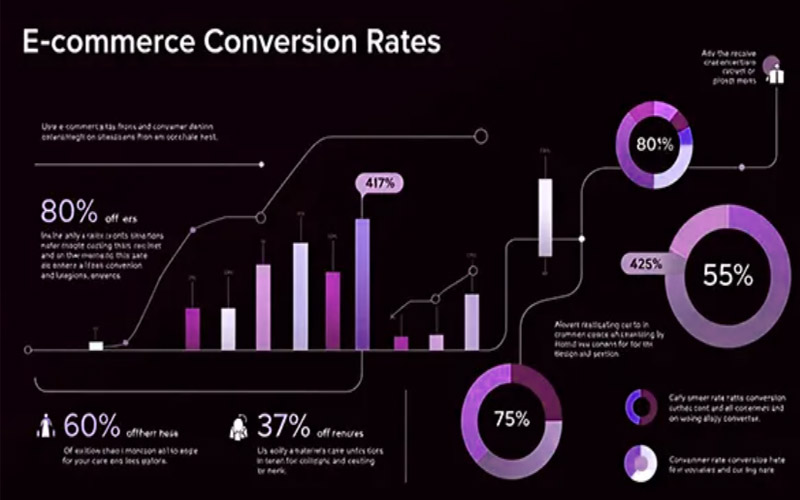
Online shoppers make purchasing decisions without physically examining products. Product images therefore need to replace some of the information customers would normally obtain from seeing a product in person.
A strong product image can answer questions such as:
When your images answer these questions clearly, customers have fewer reasons to hesitate.
Trust is one of the biggest challenges in online shopping. Customers are often cautious because they cannot physically inspect the product before paying.
Professional product photography can make your store appear more legitimate and trustworthy.
High-resolution images with accurate colors, clean backgrounds, proper lighting, and sharp details communicate professionalism. Customers are more likely to trust a business when its products are presented carefully.
This is particularly important for new e-commerce brands that do not yet have a strong reputation.
A simple principle is:
Better presentation creates stronger first impressions.
Your product may be excellent, but customers may never discover that if poor-quality photography makes it look cheap or unreliable.

A product description can explain features, but an image can often communicate the same information much faster.
For example, a clothing description might say that a jacket has:
A series of carefully photographed images can show these features instantly.
This reduces the amount of mental effort customers need to make before purchasing.
The more clearly shoppers understand the product, the more confident they can become about their buying decision.

One image is rarely enough for an important purchase.
Customers want to see products from different perspectives. Providing multiple product images allows shoppers to examine the item more carefully.
Depending on the product, you can include:
For example, a customer buying a handbag may want to see the front, back, interior compartments, handles, zipper, stitching, and material texture.
These additional views help reduce uncertainty and can make customers more comfortable purchasing.
Presentation can influence perceived value.
Consider two identical products. One is photographed professionally against a clean background with accurate lighting and carefully edited details. The other is photographed with poor lighting, distracting objects, and an uneven background.
Even though the products are identical, shoppers may perceive the professionally presented product as higher quality.
This is why professional product photo editing services can be valuable for e-commerce brands.
Techniques such as background removal, color correction, image retouching, shadow creation, and image cleanup can improve the visual presentation without changing the actual product.

A distracting background can take attention away from the product.
For many e-commerce stores, a simple white or neutral background works well because it keeps the product visually dominant.
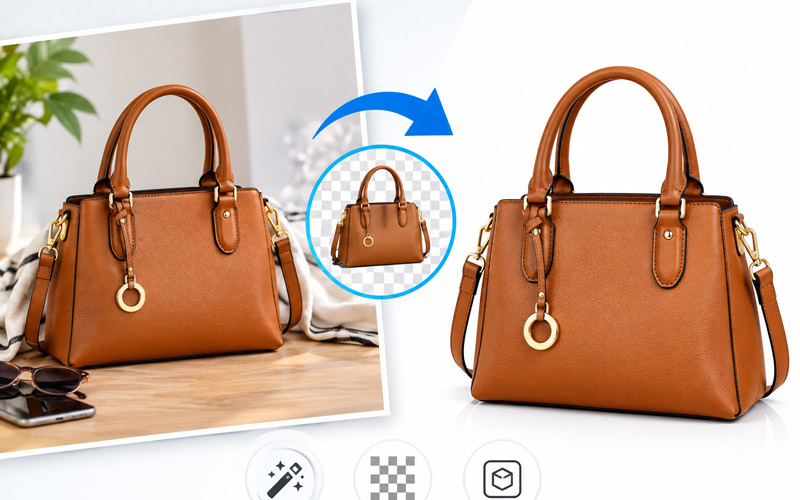
Professional background removal can help isolate a product from its original environment and create a consistent appearance across an online store.
This is particularly useful for:
A clean background allows customers to concentrate on the product rather than everything around it.
Imagine visiting an online clothing store where every product has a different background, lighting style, image size, and camera angle.
The store may immediately feel less professional.
Consistency creates visual organization.
Try to maintain similar:
A consistent product catalog makes browsing easier and gives the brand a more established appearance.
For agencies managing multiple e-commerce clients, developing consistent image-editing standards can also make large product catalogs easier to maintain.

Studio product images show what an item looks like, but lifestyle photography shows how it fits into real life.
For example, a furniture brand could show a sofa in a beautifully designed living room. A fashion retailer could photograph clothing on a model. A sports brand could show a customer using its equipment outdoors.
Lifestyle images answer an important psychological question:
“What would this product look like in my life?”
When customers can visualize themselves using a product, the item can become more emotionally appealing.
For many product categories, combining clean studio images with lifestyle photography can provide a stronger shopping experience.
Good product images do more than increase sales. They can also help reduce avoidable returns.
Customers sometimes return products because the item looks different from what they expected.
Accurate images can set realistic expectations about:
For example, showing a close-up of fabric can help customers understand its texture. Showing a product beside a familiar object can provide a better sense of scale.
The goal should not simply be to make a product look attractive. The images should represent the product accurately.
Persuasive images should still be truthful images.
A large percentage of online shopping now happens on smartphones. That means product images need to work well on smaller screens.
Mobile shoppers should be able to:
Large, unnecessarily heavy image files can negatively affect page speed. Therefore, e-commerce businesses should balance image quality with appropriate file compression.
Optimized images can help provide a smoother shopping experience without sacrificing important visual details.
Product images can also contribute to how customers discover products online.
Properly optimized image files can support image search and overall website visibility. E-commerce businesses should pay attention to:
For example, instead of using a generic filename such as IMG1234.jpg, a descriptive filename such as black-leather-womens-handbag.jpg can provide clearer context.
Image SEO should complement—not replace—high-quality product photography and useful product-page content.

Even professional photographs can require post-production.
Product photo retouching can correct common problems such as:
For products such as jewelry, cosmetics, electronics, fashion, and luxury goods, detailed retouching can make a significant difference.
However, retouching should be used responsibly. Removing temporary photographic distractions is different from digitally changing the product in a way that could mislead customers.
Strong images encourage shoppers to spend more time exploring a product page.
Customers may:
The more effectively your visual content supports the buying journey, the easier it becomes for customers to understand the offer.
Images should therefore work together with product titles, descriptions, specifications, reviews, and calls to action.

Creating conversion-focused product images does not necessarily mean making every photograph elaborate. The key is to make the product clear, attractive, accurate, and useful.
Here is a practical approach.
Start with sharp, high-resolution photographs. A low-quality original image limits what professional editing can accomplish.
Good lighting reveals product shape, texture, color, and details. Avoid excessive shadows, glare, and inconsistent exposure.
Use close-up images where necessary. If a product has special stitching, buttons, texture, controls, or design details, show them clearly.
Use similar image dimensions, backgrounds, angles, and editing standards throughout your catalog.
Background removal, clipping paths, retouching, color correction, shadow creation, and image masking can help create polished product visuals.
Use lifestyle photography when customers benefit from seeing how the product works or looks in a real environment.
Compress images appropriately while preserving visual quality. Fast-loading product pages provide a better experience for shoppers.
Businesses should not rely entirely on assumptions about which product images perform best.
A/B testing can help compare different visual approaches.
For example, you could test:
You can then monitor metrics such as:
Testing helps identify which visual presentation works best for your particular audience and product category.
Even businesses investing in photography can make mistakes that reduce the effectiveness of their images.
Avoid:
Remember that professional does not always mean complicated.
In many cases, a simple, clean, accurate product image can outperform an overly designed image that distracts customers.
For sellers managing dozens, hundreds, or thousands of product photographs, editing images individually can consume significant time.
Professional photo editing services can help businesses maintain consistent quality while allowing their internal teams to focus on marketing, sales, product development, and customer service.
For photographers and agencies, outsourcing repetitive post-production work can also improve workflow efficiency.
Services such as:
can help create professional product catalogs at scale.
Product images are not simply decorative elements on an e-commerce website. They are an important part of the customer’s decision-making process.
High-quality product photography can build trust, communicate product details, reduce uncertainty, improve perceived value, support SEO, and create a more professional shopping experience.
For e-commerce sellers, photographers, and agencies, the goal should be simple: make every product image useful, attractive, accurate, and consistent.
If your current product images look inconsistent or fail to communicate the quality of your products, professional editing may be the missing piece. With the right combination of photography, retouching, background removal, image optimization, and thoughtful presentation, your product images can become a powerful tool for turning more visitors into customers.
At ClippingImages.com, professional image editing can help e-commerce businesses, photographers, and creative agencies transform ordinary product photographs into polished, conversion-focused visual assets. Because when customers cannot physically see your product, your images become your storefront.